Ruyi's Royal Love in the Palace: the anti-Zhen Huan
Same novelist and marketed as the successor to Empresses in the Palace — but an 87-episode story about a marriage's slow failure, made at a reportedly ¥300 million and pulled from Chinese TV and streaming platforms amid 2019 and 2020 crackdowns on palace dramas.
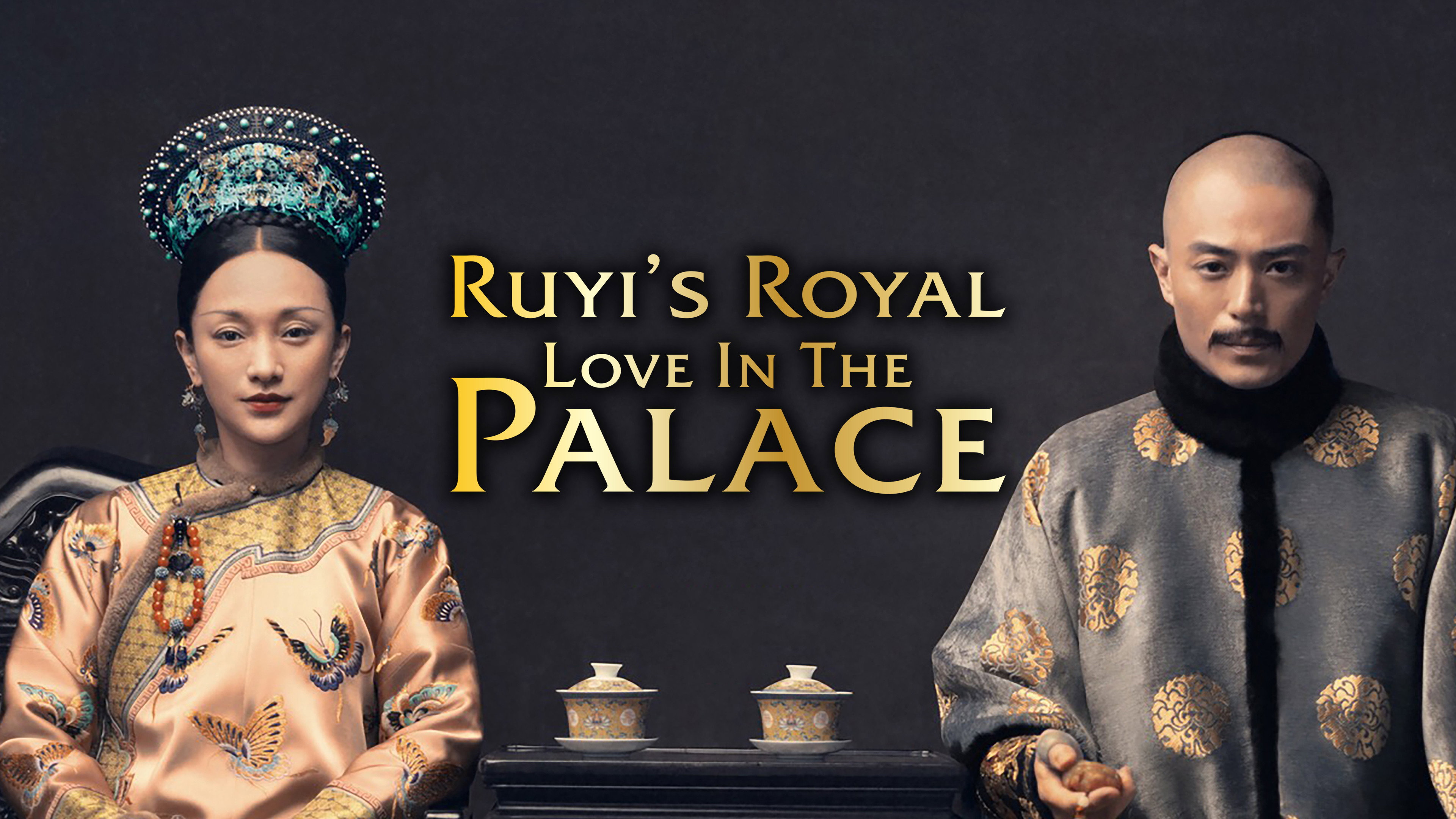
2018 · Tencent Video, Dragon TV, Jiangsu TV · Zhou Xun (周迅), Wallace Huo (霍建华)
Why this one
Ruyi's Royal Love in the Palace (如懿传) was marketed as the successor to Empresses in the Palace (甄嬛传), and there is a real connection: both are drawn from novels by Liu Lianzi (流潋紫), who also wrote this series' screenplay. What the two shows do with that shared world could hardly be more different. Empresses is, to a large extent, a story about winning. Ruyi is a story about what a long marriage to an emperor does to a person who never stops hoping it might turn out differently.
It is also one of the most expensive Chinese television projects on record: it had a reported budget of ¥300 million, and coverage at the time described it as the most expensive Chinese series to date. Filming ran from August 2016 to May 2017 across Hengdian, Beijing, Inner Mongolia, and Hangzhou, but the series did not air until August 2018.
The setup
The drama follows Empress Nara (called Ruyi, 如懿) through the reign of the Qianlong Emperor (played by Wallace Huo). The two begin as childhood sweethearts. Ruyi is initially expected to be his principal consort, but she is passed over when a relative falls into political disgrace, and she enters the palace instead as a secondary consort. From there the story follows decades of conspiracies among rival concubines, her rise to become empress, and then her removal from the position. (A spoiler for context: she dies of tuberculosis in confinement.)
This is a deliberately unfashionable shape for a palace drama. The genre's usual appeal is the heroine who learns the rules and beats the system. Ruyi is the opposite. She keeps her integrity and her hopes about the emperor's love, and the series shows over eighty-seven episodes what the palace does to both.
Note — gongdou (宫斗, palace intrigue): The term covers dramas about rivalry among the emperor's consorts. Its two great reference points are the Empresses in the Palace model, in which the heroine ends the story on top, and the more disillusioned model this series follows. Reading them together is the fastest way to see that the genre is not one story but an argument about what the palace costs.
Reception and controversy
Critics were mixed. They praised the sets and props, which are among the most elaborate in recent costume television, and criticized the heroine's lack of aggression and the slow pacing. Zhou Xun (周迅) won Best Leading Actress at the Asian Academy Creative Awards for the title role.
The series premiered on Tencent Video from August 20 to October 15, 2018, and was streamed 18.9 billion times. It then ran on national television, on Dragon TV and Jiangsu Television, from December 25, 2018, to January 15, 2019. Reports state that satellite broadcasters pulled it in late January 2019 following official criticism of palace-intrigue dramas, though it kept streaming on iQIYI at the time; it was then pulled again, this time from mainland streaming platforms, on September 27, 2020. That history is part of why the show is now discussed as much as a case study in what the genre could and could not do on Chinese television as it is for its story.
Cast and crew worth knowing
-
Zhou Xun (周迅) as Ruyi.
-
Wallace Huo (霍建华) as the Qianlong Emperor. He also leads The Journey of Flower, also on this site.
-
Supporting cast includes Janine Chang (张钧甯), Vivian Wu (郬君梅), Dong Jie (董洁), Tong Yao (童瑶), and Xin Zhilei (辛芷蕾).
-
Directed by Wang Jun (汪俊). 87 episodes.
Where to watch
- Apple TV, in some regions
Its echo outside China
For overseas viewers, Ruyi is probably best watched as a companion piece. If you have seen Empresses in the Palace, the difference in what the two shows think the palace does to a woman is the most interesting thing about either. If you have not, the two stories can be watched in either order, but Empresses is the shorter route into the genre.
Want to talk about this? Join the conversation on our Discord →