Empresses in the Palace: 76 episodes, and the Netflix cut that isn't really the show
76 episodes of Qing-court survival, and the show most Western streaming services still get wrong — the six-episode Netflix cut is a completely different animal from the original.
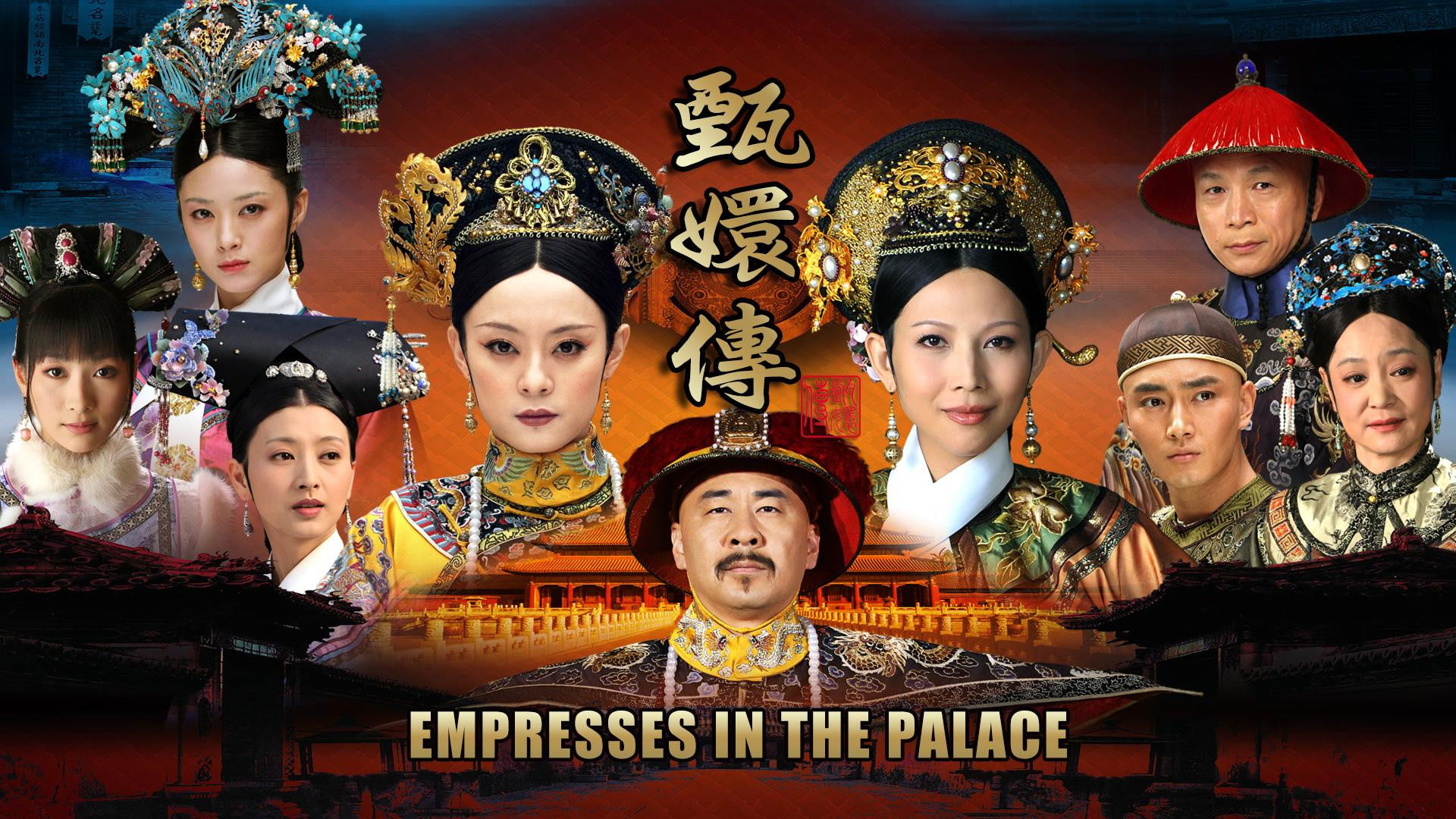
2011 · Anhui TV / Dragon TV · Sun Li
Why this one
If you've read any of our other Silk & Schemes guides, you've seen this show's fingerprints already — Empresses in the Palace is the drama every subsequent gong dou (宫斗, "palace scheming" — the genre built around court intrigue and rival-consort survival) series is implicitly in conversation with. It premiered regionally in late 2011 and went nationwide on Anhui TV and Dragon TV in March 2012, ran a full 76 episodes, and set the template — patient, procedural, unhurried scheming — that most of the genre still measures itself against.
The setup
Zhen Huan enters the imperial harem as a teenager who wants nothing to do with palace politics, and the show spends its considerable runtime tracking exactly how that stops being an option. Where Yanxi Palace compresses its heroine's transformation into a fast, angry arc, Empresses in the Palace takes the opposite approach: every alliance, betrayal, and survival tactic gets room to develop across dozens of episodes, and the show's reputation rests specifically on how convincingly it earns that patience.
注 The Netflix cut isn't the show: In 2015, a US streaming version re-edited all 76 episodes down to six 90-minute installments. It's a genuinely different viewing experience — closer to a highlight reel of plot beats than the slow-accumulating character study the original is known for. If you watch that version first, know that the show's actual reputation is built on the full-length cut.
What a Chinese viewer already knows
Zhen Huan's arc is often read domestically less as a rise-to-power story and more as a documentation of what surviving the palace actually costs a person — by the end, the show is fairly explicit that winning and losing herself happen at the same time. That ambivalence, more than any single plot twist, is what critics and fans point to when they call it the genre's high-water mark: it treats "winning" the palace as a tragedy the show refuses to dress up as a triumph.
The show's domestic reputation didn't stay static, either. Roughly a decade after it first aired, Empresses in the Palace found a second life on Chinese social media as reruns turned into a genuine rewatch culture — viewers picking apart individual lines of dialogue for buried foreshadowing, Qing-court etiquette details, and callbacks that only land on a second or third viewing. The phenomenon picked up its own semi-ironic name, 甄学 ("Zhen-ology"), treating the script with the kind of line-by-line scrutiny usually reserved for a classic novel rather than a TV drama. That close-reading culture, more than any official marketing push, is a large part of why the show has stayed a live reference point for the genre rather than fading into it — including overseas, where English-language fan communities doing the same scene-by-scene dissection grew directly out of it.</span>
Cast and crew worth knowing
-
Sun Li as Zhen Huan
-
Ada Choi as Empress Yi Xiu
-
Chen Jianbin as the Yongzheng Emperor
-
76 episodes, adapted from Liu Lianzi's novel of the same name
Where to watch
-
Netflix — the 6-episode international cut, availability varies by region
-
iQIYI / WeTV — closer to full-length versions with subtitles, where licensed
-
YouTube — official uploads of select full episodes in some regions
Its echo outside China
Empresses in the Palace is arguably the most-written-about Chinese costume drama in English-language media, precisely because of the Netflix cut controversy — it became a recurring case study in what gets lost when a 76-episode character study gets compressed into six hours for an international audience assumed to have less patience for the genre. That the original nonetheless built a devoted overseas fandom anyway, largely through fan-subtitled full versions, says something about how much appetite existed for the real thing.
Want to talk about this? Join the conversation on our Discord →